Starter Solar Gear for Beginners
Not a “best of” list: these are the kinds of gear worth investigating for a first project, with what to check before you buy. Run the Solar Planner first so you know your numbers.
As an Amazon Associate we earn from qualifying purchases. Prices are typical ranges and change often; Amazon shows the current price.
Plug-in energy meter
The first thing to buy. Measure what your devices really use before you size anything.
See options on Amazon →Small power station (about 250–500 Wh)
Phones, lights, a router and a laptop for a few hours. Light enough to carry anywhere.
See options on Amazon →Mid-size power station (about 1,000 Wh)
Our example office for about a day. Look for LiFePO4 batteries, a strong solar input and at least 1,000 W of output.
See options on Amazon →Large power station (2,000 Wh+)
Outage essentials for a family, maybe a small fridge. Check surge rating and expansion options.
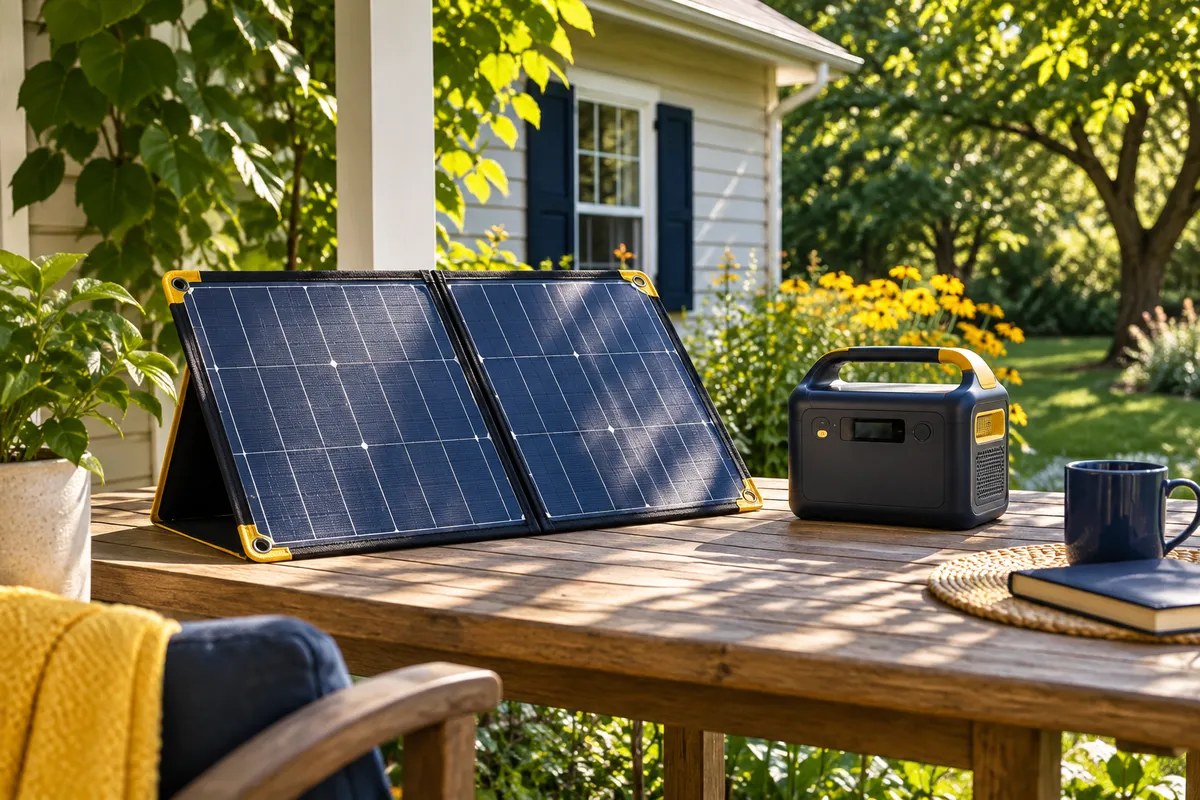
See options on Amazon →Folding solar panel (100–200 W)
Pairs with most power stations. Confirm the voltage and connector match your station.
See options on Amazon →Panel extension cable
Lets the panel sit in the sun while the station stays in the shade.
See options on Amazon →Popular power station brands to compare
EcoFlow · Jackery · Bluetti · Anker SOLIX
What to check on any power station
- Usable capacity (Wh) vs. what your planner says you need.
- Continuous and surge output (W) for everything you'll run at once.
- Battery type: LiFePO4 batteries usually last many more charge cycles.
- Solar input limits: max watts, voltage range and connector type.
- Safety certification (UL or similar), warranty length and real customer support.
- Expansion: which extra batteries actually work with it.